

Decks & Patios
As a deck builder in Brooklyn and Queens, we design and build custom decks and patios for homeowners who want clean construction, long-term durability, and a builder who understands NYC conditions. Our work focuses on platform decks, ground-level decks, and raised decks, most often extending from a second floor. Most of our projects serve brownstones and attached homes, with select single-family properties as well. Every deck is designed around structure, drainage, and code compliance, not shortcuts.

Get your personalized quote
Fill out the form below, and we’ll provide a custom quote tailored to your project.
What we build
Our decks and patios are primarily framed outdoor structures, not stone or masonry installations. Most projects fall into one of the following categories:
Platform and ground-level decks
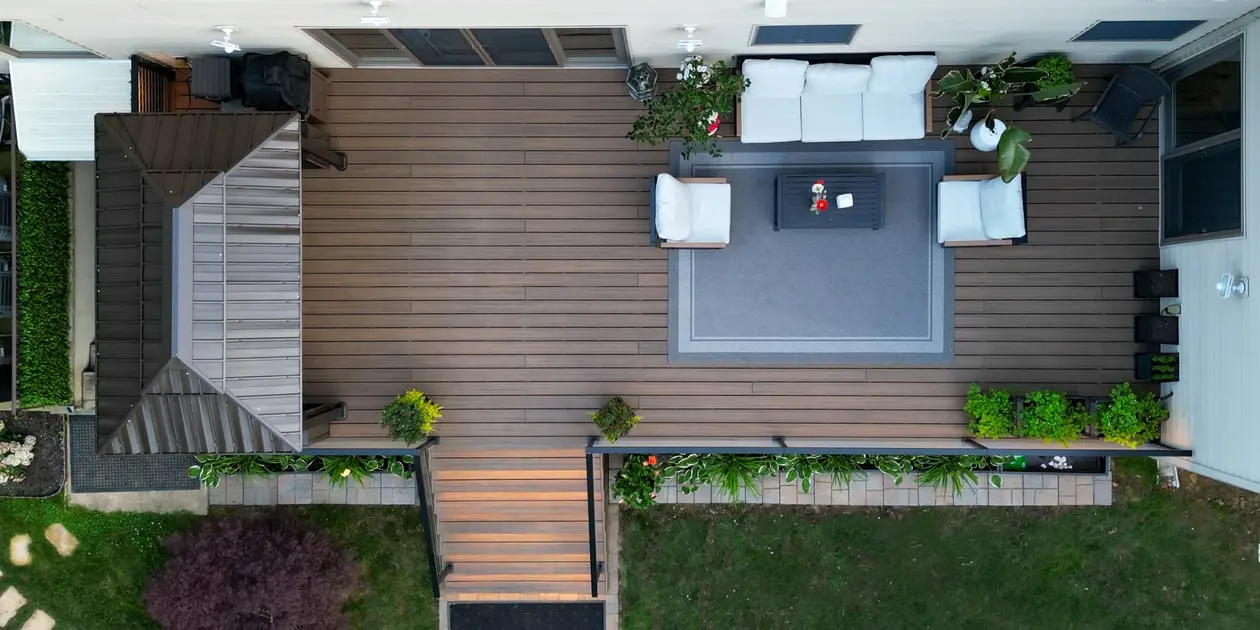
Platform and low-profile decks typically range from grade to approximately four feet above ground. In NYC backyards, these decks create usable outdoor space where excavation or masonry work isn’t practical. Design decisions prioritize airflow, drainage, and long-term performance while avoiding moisture buildup against the house.
These decks are ideal for compact urban yards or homeowners looking to upgrade outdoor space with minimal disturbance to current conditions.
Raised and second-floor decks
Raised and second-floor decks make up a significant portion of our work across Brooklyn and Queens, especially on brownstones and attached homes where outdoor space is limited to upper levels. These structures typically extend from the parlor or second floor and require detailed coordination between framing, waterproofing, and drainage to perform properly over time.
When a raised deck is built over usable space below, we install an under-deck waterproofing system such as Trex RainEscape or an equivalent solution to capture and direct water away from the structure. Drainage paths and gutter tie-ins are planned from the outset. The underside of the deck can then be finished with a clean, architectural soffit system using vinyl, wood, or composite panels, depending on design goals and upkeep preferences. This approach creates a durable outdoor deck above and a dry, finished space below suitable for storage or everyday use.
Materials and systems we use
Material selection is driven by longevity, performance, and suitability for urban residential environments.
Framing
• Pressure-treated lumber framing is our standard system for most projects
• Welded steel framing is used selectively when site conditions or structural requirements call for it
Decking surfaces
• Composite decking is the primary surface material we install. As a composite deck installer in NYC, we work with Trex and TimberTech for their durability, consistency, and low maintenance
• Hardwood decking, such as ipe, is used selectively when a natural wood finish is desired and the client understands the maintenance requirements
Railings and safety
• Aluminum railing systems are the standard for raised decks
• Glass railing systems are available when unobstructed views or a more architectural look is desired
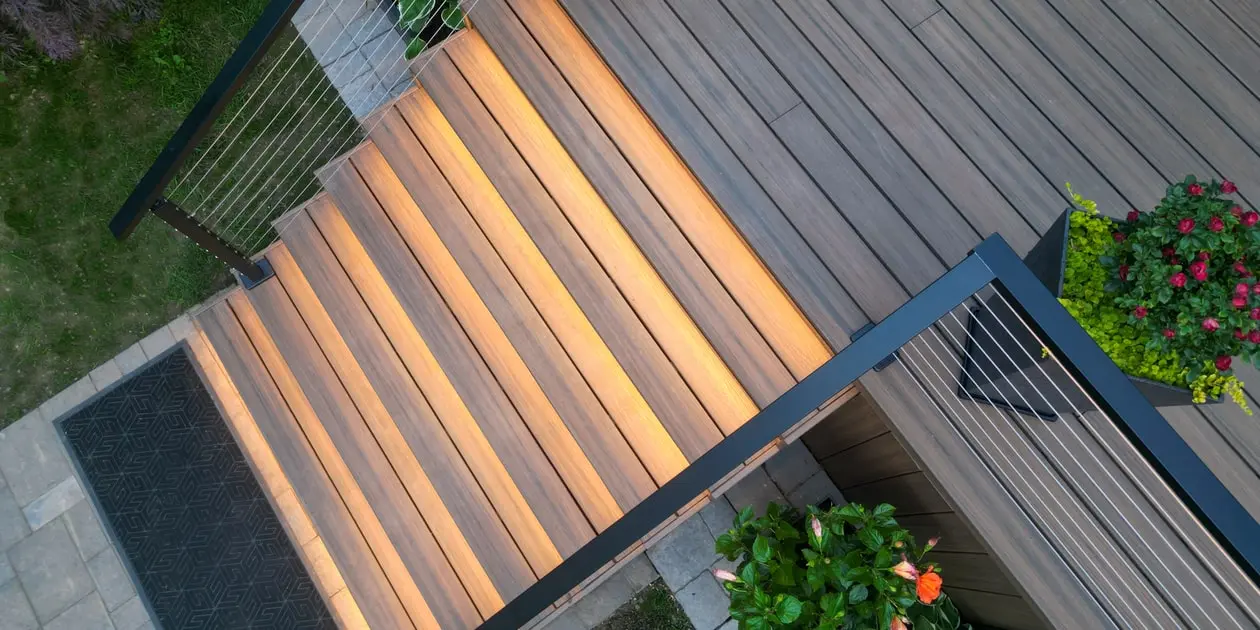
• Cable and rod railings are frequently specified for their clean appearance and durability
• Composite railings are used when appropriate for the design
NYC-specific planning and permitting
Backyard deck projects in Brooklyn and Queens commonly include more than straightforward construction.
We regularly:
• Coordinate with architects and structural engineers
• Assist with required documentation when permitting is needed
• Build decks that correspond with approved drawings and structural requirements
Each property is different. Attached brownstones, shared walls, lot coverage limits, and access constraints are all considered during planning, so the build phase moves forward effortlessly.
Drainage, ground conditions, and durability
A deck is only as good as what’s underneath it. Every project accounts for:
• Existing grade and slope
• Drainage paths and water management
• Ground conditions that affect lasting stability
• Ventilation beneath the deck structure to prevent moisture buildup
These details are critical in NYC backyards and are addressed early in the design process.
How the process works
1. Initial walkthrough: We review the site, access, existing conditions, and goals for the space.
2. Design and coordination: Layout, materials, railing systems, and structural approach are finalized. When required, we coordinate with architects or engineers.
3. Approvals and preparation: Permitting and documentation are handled in coordination with the project team.
4. Construction: Our team builds the deck with attention to structure, detailing, and finish quality.
5. Final review: The completed deck is reviewed to ensure it performs as intended and meets project expectations.
Why homeowners choose Vandeck Builders
• Experience as a deck contractor in Brooklyn and Queens, specializing in brownstones and attached homes
• Strong understanding of structural and code requirements
• Clean, professional construction with attention to detail
• Open communication during the entire process
• Focus on lasting performance, not shortcuts
• Two-year workmanship warranty and six-year structural warranty
Frequently asked questions
Check out our FAQ section for answers to common questions about our services, techniques, and options.
Can you match the existing architectural style of my building?
Yes. We can choose materials and styles to match your building’s architecture. Our goal is to make new work look like it belongs with the original design.
Can you provide a proposal before a site visit?
Yes. A preliminary proposal can be prepared based on photos and dimensions. Final pricing is confirmed after an on-site walkthrough to verify conditions, access, and requirements.
Do you install IPE or other hardwoods?
Yes, we specialize in ipe, cumaru, tigerwood, and teak decking.
What is the most low-maintenance decking option?
Porcelain pavers and composite decking are typically the lowest-maintenance options. They do not require regular sealing and perform well over time with minimal upkeep.
What does grandfathered status mean for an existing deck?
Grandfathered status means an existing deck was legally built under previous codes and is allowed to remain as is. Significant modifications or rebuilding can trigger the requirement to meet current building and zoning regulations.
Are material warranties transferred to the homeowner?
Yes. Manufacturer warranties apply to the materials used on your project and are transferred to the homeowner when applicable. Some warranties require registration or specific maintenance, and we provide the relevant documentation.
How often should composite decking be cleaned or maintained?
Composite decking typically requires light cleaning with soap and water once or twice per year. Harsh chemicals, snow-melting products, and metal shovels should be avoided to prevent surface damage.
How often should hardwood decking be oiled or refinished?
Hardwood decking is typically oiled once per year, depending on sun exposure and foot traffic. Skipping maintenance does not affect structural performance but will accelerate graying and weathering.
How often should hardwood decking be oiled or refinished?
Hardwood decking is typically oiled once per year, depending on sun exposure and foot traffic. Skipping maintenance does not affect structural performance but will accelerate graying and weathering.
How often should composite decking be cleaned or maintained?
Composite decking typically requires light cleaning with soap and water once or twice per year. Harsh chemicals, snow-melting products, and metal shovels should be avoided to prevent surface damage.
Are material warranties transferred to the homeowner?
Yes. Manufacturer warranties apply to the materials used on your project and are transferred to the homeowner when applicable. Some warranties require registration or specific maintenance, and we provide the relevant documentation.
What does grandfathered status mean for an existing deck?
Grandfathered status means an existing deck was legally built under previous codes and is allowed to remain as is. Significant modifications or rebuilding can trigger the requirement to meet current building and zoning regulations.
What is the most low-maintenance decking option?
Porcelain pavers and composite decking are typically the lowest-maintenance options. They do not require regular sealing and perform well over time with minimal upkeep.
Do you install IPE or other hardwoods?
Yes, we specialize in ipe, cumaru, tigerwood, and teak decking.
Can you match the existing architectural style of my building?
Yes. We can choose materials and styles to match your building’s architecture. Our goal is to make new work look like it belongs with the original design.
Can you provide a proposal before a site visit?
Yes. A preliminary proposal can be prepared based on photos and dimensions. Final pricing is confirmed after an on-site walkthrough to verify conditions, access, and requirements.

-2.svg)
Building beautiful, sustainable outdoor spaces for a better living experience.