

Pergolas
We design and build custom pergolas for residential and multi-unit properties across Manhattan, Brooklyn, and Queens. Our work includes aluminum and hardwood pergolas installed on rooftops, decks, and at ground level, built as freestanding structures or attached to an existing building. Every pergola is designed around structural requirements, material performance, and NYC code compliance, with roof, wall, and comfort options configured to how the space will actually be used.
Get your personalized quote
Fill out the form below, and we’ll provide a custom quote tailored to your project.
What we build
Pergola construction in NYC varies significantly depending on the material, location, and how enclosed the structure needs to be. Our projects are built in two primary material systems, each suited to different conditions and design goals.
Aluminum pergolas
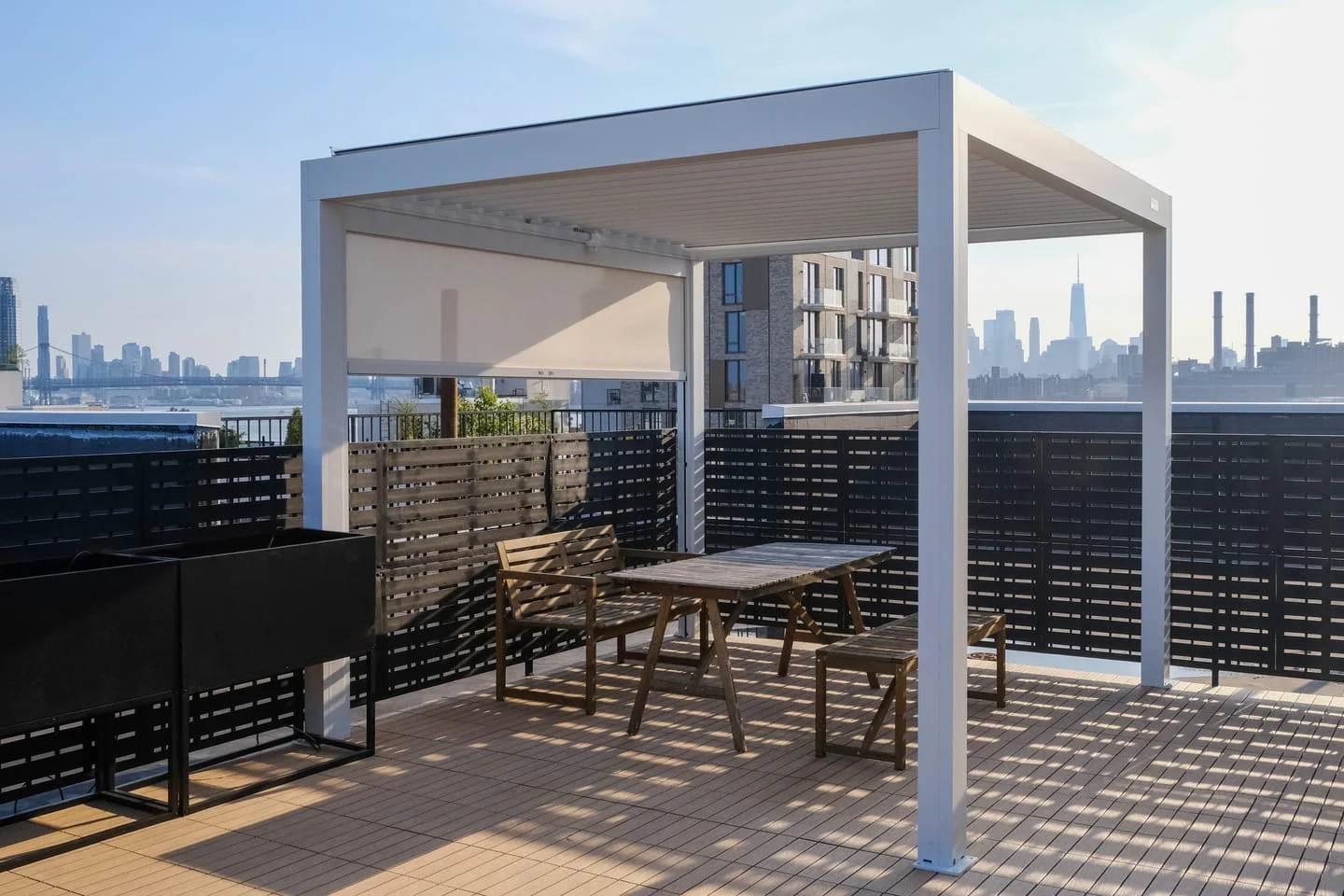
Aluminum is our most frequently specified pergola material, particularly for rooftop installations where weight, fire rating, and long-term durability are primary concerns. Aluminum pergolas do not rot, warp, or require refinishing, and they perform well under the temperature swings and moisture exposure common in NYC.
Aluminum framing supports the full range of roof and wall configurations we offer, including motorized louvered roofs, retractable canopies, and integrated enclosure systems. As a rooftop pergola installer in NYC, we find these structures are well suited for applications where wind loads and building code requirements limit what can be installed.
PERGOLUX is one of the aluminum louvered systems we specify most often. Vandeck Builders is an Authorized PERGOLUX Partner, so units are sourced directly from the manufacturer and carry a genuine factory warranty. Our team handles everything the manufacturer doesn't: structural anchoring, watertight roof connections, electrical coordination, and permitting where the installation requires it.
Wood pergolas
We build wood pergolas using cedar, ipe, and cumaru. These hardwoods are selected for their natural resistance to decay, insect damage, and weathering. As a pergola builder in Brooklyn and across NYC, we most commonly install wood pergolas in backyards and on ground-level decks where a natural material appearance is preferred and fire-rating requirements are less restrictive than on rooftops.
Design decisions around wood species account for grain, color, maintenance expectations, and structural span. Ipe and cumaru offer greater density and hardness than cedar, but all three species perform well in outdoor applications when properly detailed and maintained.
Materials, options, and systems we use
Roof options
• Open-beam roofs provide partial shade while maintaining airflow and an open feel. This is the simplest configuration and works well where full weather protection is not required
• Retractable canopies offer adjustable coverage and can be extended or retracted depending on conditions. Available in manual or motorized configurations
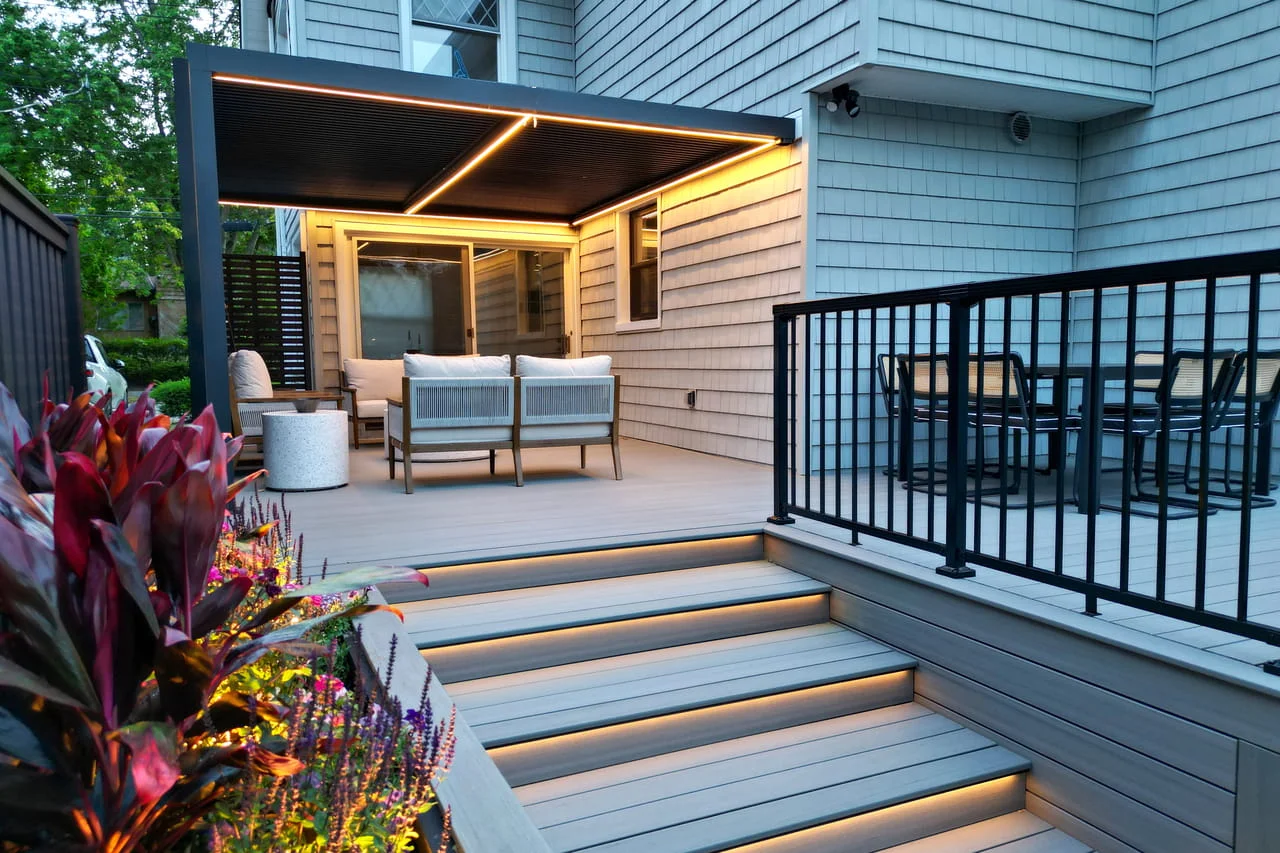
• Louvered roofs use angled slats that rotate to control sunlight, airflow, and rain protection. Motorized louver systems allow adjustment by remote or integrated control
Wall options
• Roll-down shades provide wind and sun screening while maintaining visibility. Available in mesh or solid fabric depending on the level of enclosure desired
• Louvered wall panels offer adjustable privacy and airflow control using the same rotating slat principle as louvered roofs
• Glass walls create a fully enclosed or semi-enclosed space suitable for extended seasonal use. Glass panels can be fixed, sliding, or folding depending on the design
Integrated features
• LED lighting can be recessed into beams, posts, or roof structures for even, low-profile illumination
• Ceiling fans are available for covered pergola configurations where airflow is needed in warmer months
• Heaters, including infrared and radiant models, extend the usable season of the space
• Motorized roof and wall systems can be operated independently or together through integrated controls
NYC-specific planning and permitting
Pergola projects in NYC require more planning than a straightforward backyard installation in most other markets. Permits are typically required when a pergola is attached to a building, installed on a rooftop, or exceeds certain size thresholds, and the requirements vary by borough and building classification.
We regularly:
• Coordinate with architects and structural engineers when the project scope requires it
• Assist with DOB filings and required documentation
• Build in accordance with approved drawings and structural requirements
• Confirm fire-rating, setback, and height requirements based on building type and installation location
Manhattan properties frequently involve co-op or condo board approvals, alteration agreements, and coordination with building management. Brooklyn and Queens projects may carry different zoning and access considerations, which are addressed during planning.
Structural considerations and durability
A pergola must be engineered for the conditions it will face, especially in NYC, where wind exposure, rooftop weight limits, and attachment to existing structures all require careful planning.
Every project accounts for:
• Wind loads and uplift, particularly on rooftop installations
• Structural capacity of the supporting surface, whether a roof, deck, or ground-level footing
• Attachment method and connection detailing to the building or deck structure
• Material performance over time given sun exposure, moisture, and temperature cycling
When a pergola is installed on a rooftop, structural coordination with the building's engineer is often required to verify that the roof assembly can support the added load. These details are confirmed before construction begins.
How the process works
1. Initial walkthrough: We review the site, access, existing conditions, and goals for the space, including how the pergola will be used and what level of enclosure is needed.
2. Design and coordination: Layout, materials, roof and wall systems, and structural approach are finalized. When required, we coordinate with architects, engineers, or building management.
3. Approvals and preparation: Permitting, DOB filings, and board approvals are handled in coordination with the project team. Material lead times and site access are planned in advance.
4. Construction: Our team builds the pergola with attention to structural connections, detailing, and finish quality.
5. Final review: The completed pergola is reviewed to ensure it performs as intended and meets project expectations.

Why property owners choose Vandeck Builders
• Experience as a pergola contractor in NYC across rooftop and ground-level installations
• Aluminum and hardwood pergola construction with full roof, wall, and enclosure options
• Strong understanding of structural and code requirements for NYC properties
• Clean, professional construction with attention to detail and finish quality
• Open communication during the entire process, including coordination with building management and project teams
• Two-year workmanship warranty and six-year structural warranty
Frequently asked questions
Check out our FAQ section for answers to common questions about our services, techniques, and options.
Can you match the existing architectural style of my building?
Yes. We can choose materials and styles to match your building’s architecture. Our goal is to make new work look like it belongs with the original design.
Can pergolas be installed on rooftop decks?
Yes, pergolas can be installed on rooftop decks when properly planned. Design considerations include wind exposure, attachment method, structural capacity, and building approvals.
Do pergolas require permits in NYC?
It depends on the location and construction type. Pergolas installed on rooftops or attached to a building typically require permits, while some small freestanding backyard pergolas may not.
What pergola materials are best for NYC conditions?
Aluminum pergolas generally perform best in NYC conditions. They handle moisture, temperature changes, and long-term exposure more reliably than many other materials.
Can outdoor lighting be integrated with smart home systems?
Yes. Outdoor lighting can be integrated with smart home platforms for scheduling, dimming, and remote control.
Do you provide workmanship warranties?
Yes. Vandeck Builders provides a two-year workmanship warranty on all services. Warranty terms are reviewed before the agreement is finalized, and manufacturer warranties are passed through to the homeowner.
Do you provide workmanship warranties?
Yes. Vandeck Builders provides a two-year workmanship warranty on all services. Warranty terms are reviewed before the agreement is finalized, and manufacturer warranties are passed through to the homeowner.
Can outdoor lighting be integrated with smart home systems?
Yes. Outdoor lighting can be integrated with smart home platforms for scheduling, dimming, and remote control.
What pergola materials are best for NYC conditions?
Aluminum pergolas generally perform best in NYC conditions. They handle moisture, temperature changes, and long-term exposure more reliably than many other materials.
Do pergolas require permits in NYC?
It depends on the location and construction type. Pergolas installed on rooftops or attached to a building typically require permits, while some small freestanding backyard pergolas may not.
Can pergolas be installed on rooftop decks?
Yes, pergolas can be installed on rooftop decks when properly planned. Design considerations include wind exposure, attachment method, structural capacity, and building approvals.
Can you match the existing architectural style of my building?
Yes. We can choose materials and styles to match your building’s architecture. Our goal is to make new work look like it belongs with the original design.

-2.svg)
Building beautiful, sustainable outdoor spaces for a better living experience.