

Roof Decks
We design and build custom roof decks for residential and commercial properties across Manhattan, Brooklyn, and Queens. Our work covers private rooftops on brownstones and townhouses, shared terraces on condo buildings, and hospitality installations for bars and restaurants. Every roof deck installation in NYC is planned around structural capacity, waterproofing, fire-rated material requirements, and building code compliance — not assumptions.

Get your personalized quote
Fill out the form below, and we’ll provide a custom quote tailored to your project.
What we build
Roof deck construction differs from standard deck building. Every project involves an existing roof structure, weight limits, waterproofing layers, and fire-safety requirements that don't apply at ground level. Our projects fall into two general categories.
Residential roof decks
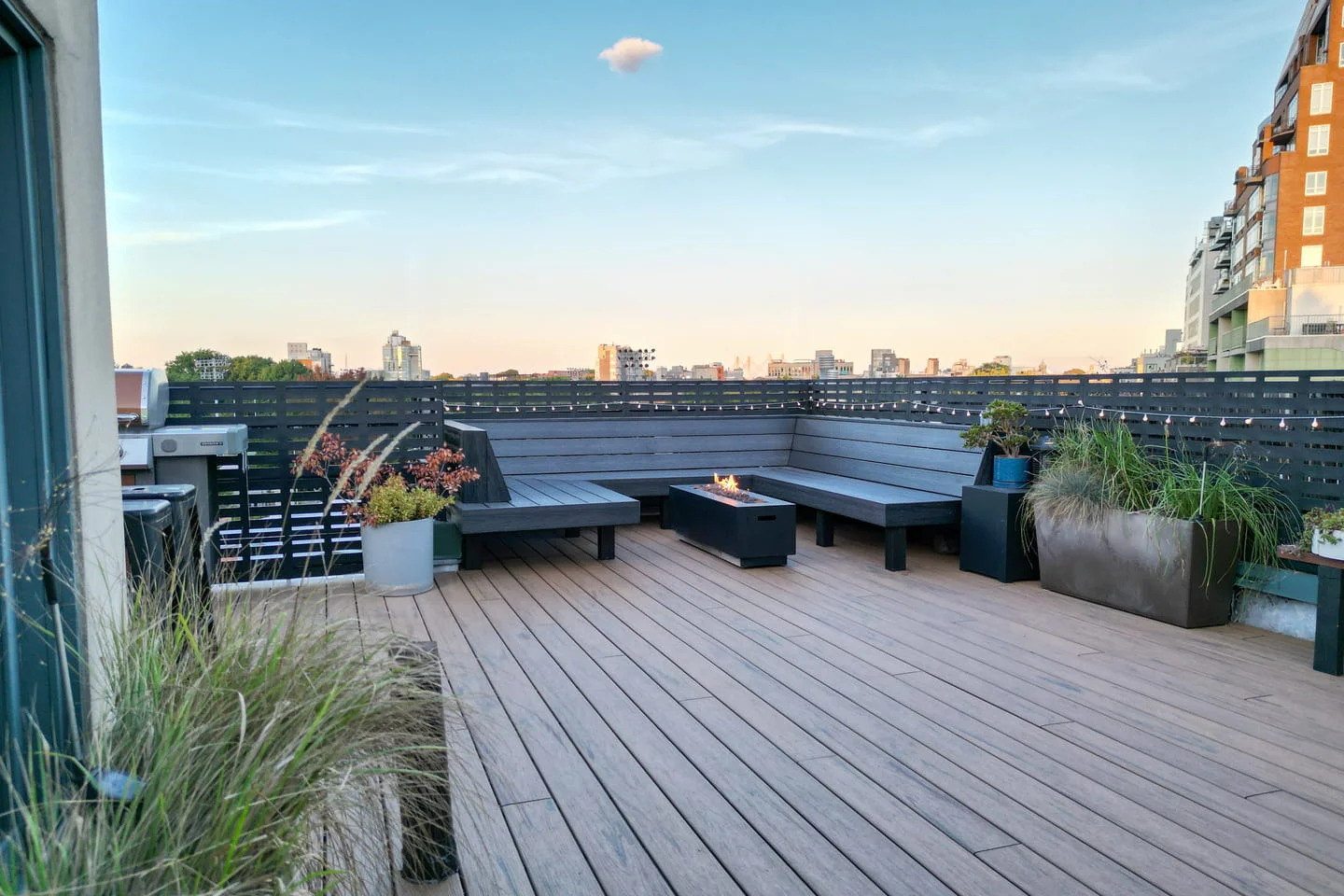
Residential roof deck projects make up a significant portion of our work, particularly in Manhattan and Brooklyn where outdoor space is often limited to rooftop access. As a roof deck contractor in Brooklyn and across the boroughs, we work on brownstones, townhouses, and multi-unit residential buildings where owners want functional outdoor space without compromising the roof structure below.
Design decisions account for the existing roof assembly, structural load capacity, drainage paths, and access conditions. When a building's roof was not originally designed for occupancy, we coordinate with structural engineers to determine what modifications, if any are required to support a finished deck system. Material selection, railing placement, and layout are all driven by building-specific conditions and code.
Commercial and hospitality roof decks
We also build roof decks for commercial properties, including bars, restaurants, and shared common areas in larger buildings. These projects carry additional requirements around occupancy loads, egress, fire separation, and accessibility that go beyond standard residential work.
Commercial rooftop projects typically involve more coordination with architects, expeditors, and building management. We work within those project teams to deliver construction that meets the approved scope and performs under heavier use.

Materials and systems we use
Material selection on a rooftop is governed by fire rating, weight, and compatibility with the roof assembly. Not all materials suitable for backyard decks can be used on a roof.
Decking surfaces
• Porcelain pavers installed on adjustable pedestal systems are our most common rooftop surface. They are non-combustible, durable, and available in a range of finishes and sizes
• Fire-rated hardwood pavers, such as ipe, are used when a natural wood appearance is preferred and the installation meets applicable fire-rating requirements
• Composite decking is used selectively on rooftops. TimberTech's Vintage Collection is the primary fire-resistant composite option suitable for roof deck installations
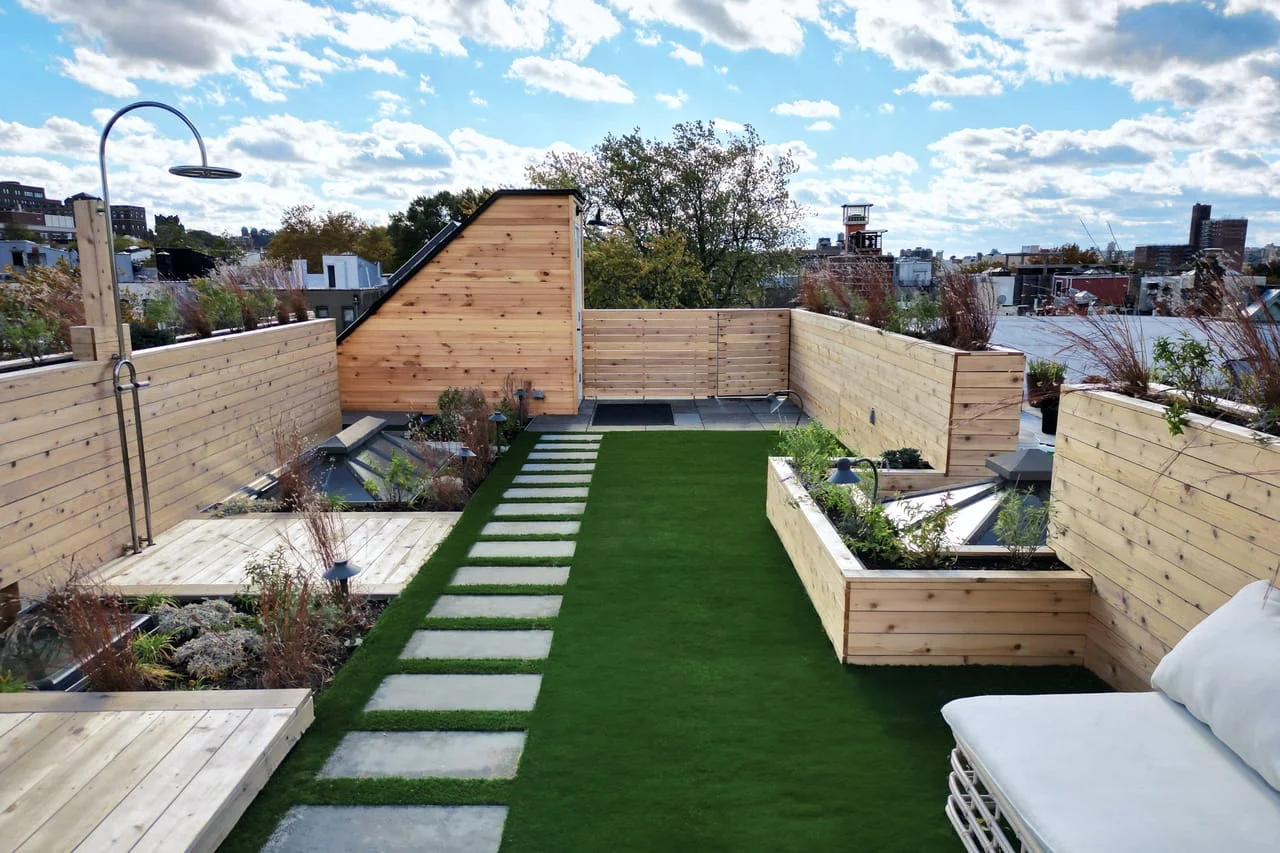
• Synthetic turf can be installed on pedestal systems when a landscaped appearance is part of the design
Structural support
• Adjustable pedestal systems are the standard method for setting pavers on flat or low slope roofs. Pedestals allow drainage beneath the surface, protect the waterproofing membrane, and create a level deck over uneven substrates
• Sleeper systems or lightweight framing are used when the deck design, surface material, or roof conditions require it
• Welded steel framing is specified when structural loads or spans exceed what lighter systems can support
Railings and safety systems
• Aluminum railing systems are the standard for rooftop applications due to their strength to weight ratio and corrosion resistance
• Glass railing systems are available when unobstructed sight lines or a more architectural look is desired
• Cable and rod railings are frequently specified for their clean appearance and code compliant openings
• All rooftop railing systems meet NYC requirements for minimum height, load resistance, and opening dimensions
NYC-specific planning and permitting
Roof deck projects in NYC involve more regulatory coordination than ground level construction. Most rooftop installations require permits, DOB filings, or both, depending on the scope, building classification, and whether structural modifications are involved.
We regularly:
• Coordinate with architects, structural engineers, and expediters
• Assist with required documentation when DOB filings are needed
• Build in accordance with approved drawings and structural requirements
• Confirm fire rating, setback, and guardrail requirements based on building type and roof conditions
Manhattan properties in particular often involve co-op or condo board approvals, alteration agreements, and coordination with building management, all of which are factored into the project timeline. Brooklyn and Queens projects may carry different zoning and access considerations, which are addressed during planning.
Waterproofing, drainage, and roof protection
A roof deck sits on top of a waterproofing system that protects the building. Construction methods must preserve that system — not compromise it.
Every project accounts for:
• Existing waterproofing membrane condition and type
• Drain locations, overflow paths, and required clearances
• Protection layers between the deck system and the membrane
• Access to roof drains, vents, and mechanical equipment for ongoing maintenance and inspection
As a rooftop deck builder in NYC, we design pedestal-set surfaces with gaps that allow water to flow freely to drains beneath the deck. When the existing membrane is at or near end of life, we flag this during assessment so the owner can address it before deck construction begins.

How the process works
1. Initial assessment: We review the roof structure, membrane condition, access, load capacity, and goals for the space.
2. Design and coordination: Layout, materials, railing systems, and structural approach are finalized. When required, we coordinate with engineers, architects, or building management.
3. Approvals and preparation: Permitting, DOB filings, and board approvals are handled in coordination with the project team. Material logistics and rooftop access are planned in advance.
4. Construction: Our team builds the roof deck with attention to membrane protection, structural detailing, and finish quality.
5. Final review: The completed roof deck is reviewed to ensure it performs as intended and meets project expectations.
Why property owners choose Vandeck Builders
• Experience as a roof deck contractor in NYC across residential and commercial projects
• Strong understanding of structural, fire-rating, and rooftop code requirements
• Clean, professional construction with attention to membrane protection and drainage
• Open communication during the entire process, including coordination with building management and project teams
• Focus on lasting performance through proper waterproofing protection and structural compliance
• Two-year workmanship warranty and six-year structural warranty
Frequently asked questions
Check out our FAQ section for answers to common questions about our services, techniques, and options.
Can pergolas be installed on rooftop decks?
Yes, pergolas can be installed on rooftop decks when properly planned. Design considerations include wind exposure, attachment method, structural capacity, and building approvals.
Can outdoor kitchens be installed on rooftops?
Yes, outdoor kitchens can be installed on rooftops, subject to building rules and code requirements. Design typically considers weight limits, fire safety, ventilation, and utilities such as gas, water, and electrical connections.
Do rooftop decks in NYC require permits?
Most rooftop deck projects in NYC require permits, particularly when new structures are built, access is modified, or loads are introduced. Some surface-level or repair work may not require filings, but requirements depend on the specific scope and building classification and are confirmed during planning.
When is a structural engineer required?
A structural engineer is typically required when loads change, framing is modified, or existing conditions require formal verification. This determination is made during the design phase based on scope and building conditions.
Are rooftop decks designed for snow loads?
Yes, structural calculations account for applicable live loads including snow.
What safety measures are taken on active rooftops?
Safety measures may include temporary guardrails, perimeter protection, controlled access zones, and site-specific precautions based on conditions and scope. Safety requirements are reviewed and implemented throughout the project.
How long does a typical rooftop project take?
Project duration varies by scope and complexity. Most rooftop projects take several weeks to complete once construction begins, after planning and approvals.
Are the materials you use fire-rated for rooftop applications?
Yes. We select systems and materials that meet applicable fire-rating and rooftop-use requirements. Final material selection depends on building conditions, code requirements, and approved design.
What types of pavers do you recommend for rooftop decks?
For rooftop decks, we typically recommend porcelain pavers or fire-rated ipe pavers installed on pedestal systems. Key considerations include slip resistance, thickness, weight, and compatibility with the roof assembly.
What makes a railing system code-compliant for NYC?
NYC code-compliant railing systems generally require a minimum height of 42 inches, must resist a 200-pound load, and limit openings to no more than 4 inches. Additional requirements may apply based on building type, location, and access conditions.
Are planters designed for rooftop load limits?
Yes. Planters installed on rooftops are designed with weight, drainage, and soil volume in mind. Load limits are reviewed during design to ensure compliance with structural requirements.
What does grandfathered status mean for an existing deck?
Grandfathered status means an existing deck was legally built under previous codes and is allowed to remain as is. Significant modifications or rebuilding can trigger the requirement to meet current building and zoning regulations.
How are materials transported to rooftops or upper floors?
Materials are typically transported using elevators, stairs, or cranes, depending on building conditions and rules. The method is planned in advance and coordinated before work begins.
How are materials transported to rooftops or upper floors?
Materials are typically transported using elevators, stairs, or cranes, depending on building conditions and rules. The method is planned in advance and coordinated before work begins.
What does grandfathered status mean for an existing deck?
Grandfathered status means an existing deck was legally built under previous codes and is allowed to remain as is. Significant modifications or rebuilding can trigger the requirement to meet current building and zoning regulations.
Are planters designed for rooftop load limits?
Yes. Planters installed on rooftops are designed with weight, drainage, and soil volume in mind. Load limits are reviewed during design to ensure compliance with structural requirements.
What makes a railing system code-compliant for NYC?
NYC code-compliant railing systems generally require a minimum height of 42 inches, must resist a 200-pound load, and limit openings to no more than 4 inches. Additional requirements may apply based on building type, location, and access conditions.
What types of pavers do you recommend for rooftop decks?
For rooftop decks, we typically recommend porcelain pavers or fire-rated ipe pavers installed on pedestal systems. Key considerations include slip resistance, thickness, weight, and compatibility with the roof assembly.
Are the materials you use fire-rated for rooftop applications?
Yes. We select systems and materials that meet applicable fire-rating and rooftop-use requirements. Final material selection depends on building conditions, code requirements, and approved design.
How long does a typical rooftop project take?
Project duration varies by scope and complexity. Most rooftop projects take several weeks to complete once construction begins, after planning and approvals.
What safety measures are taken on active rooftops?
Safety measures may include temporary guardrails, perimeter protection, controlled access zones, and site-specific precautions based on conditions and scope. Safety requirements are reviewed and implemented throughout the project.
Are rooftop decks designed for snow loads?
Yes, structural calculations account for applicable live loads including snow.
When is a structural engineer required?
A structural engineer is typically required when loads change, framing is modified, or existing conditions require formal verification. This determination is made during the design phase based on scope and building conditions.
Can outdoor kitchens be installed on rooftops?
Yes, outdoor kitchens can be installed on rooftops, subject to building rules and code requirements. Design typically considers weight limits, fire safety, ventilation, and utilities such as gas, water, and electrical connections.
Can pergolas be installed on rooftop decks?
Yes, pergolas can be installed on rooftop decks when properly planned. Design considerations include wind exposure, attachment method, structural capacity, and building approvals.
Do rooftop decks in NYC require permits?
Most rooftop deck projects in NYC require permits, particularly when new structures are built, access is modified, or loads are introduced. Some surface-level or repair work may not require filings, but requirements depend on the specific scope and building classification and are confirmed during planning.

-2.svg)
Building beautiful, sustainable outdoor spaces for a better living experience.