

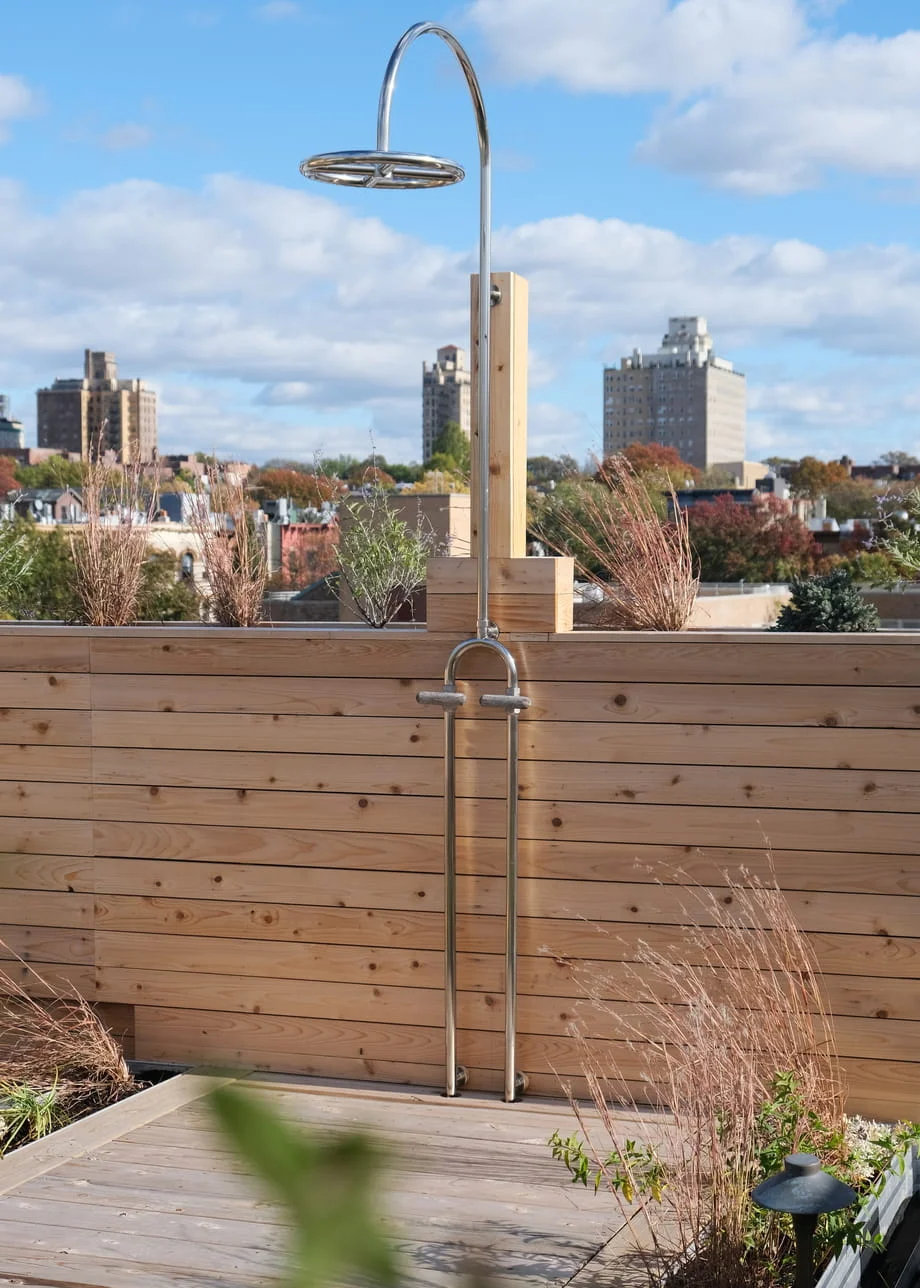
We install composite and hardwood in roughly equal proportions across our projects. Some clients know exactly what they want walking on; others need to weigh the trade-offs. This guide breaks down the installed cost, ongoing maintenance, and long-term value of each material for NYC homeowners and building owners, with pricing specific to the New York market.
Upfront cost: composite decking
Composite decking is made from a blend of recycled wood fibers and plastic polymers, wrapped in a protective outer cap. The major brands used in NYC include Trex, TimberTech, and Fiberon. We're certified installers for all three and recommend different product lines depending on the project.
Material costs for composite decking boards range from about $5 to $14 per square foot, depending on the product line. Trex Enhance, one of the most popular mid-range options, runs around $6 to $8 per square foot for the boards alone. TimberTech's premium AZEK line can reach $10 to $13 per square foot.
But board cost is only part of the picture. A complete composite deck installation includes the substructure (pressure-treated framing, joists, ledger board), hidden fasteners, railing, stairs if needed, and labor. In NYC, the fully installed cost for a composite deck typically falls between $40 and $70 per square foot, depending on the product line, the complexity of the layout, and site access.
For a typical 400-square-foot rooftop deck or patio in Manhattan or Brooklyn, that translates to roughly $16,000 to $28,000 for composite decking, before any add-ons like lighting, planters, or built-in seating.
Labor is a significant portion of the cost in New York City. A typical installation involves a three-to-four person crew working three to five days depending on logistics and complexity. The labor cost for a 400-square-foot deck is influenced by access conditions, the layout (straight runs vs. intricate patterns), insurance requirements for the specific building, and other project-specific factors. There's no single hourly rate that captures all of that. The labor component is built into our installed pricing based on the full scope of the project.
One thing worth noting: higher-end composite lines from Trex and TimberTech have gotten remarkably close to the look and feel of real wood. Some product lines are designed to replicate the grain, color variation, and texture of ipe specifically. If part of the appeal of hardwood is the aesthetic, it is worth seeing the premium composite options in person before assuming wood is the only way to get that look.
Upfront cost: hardwood decking
Hardwood decking, most commonly ipe, cumaru, tigerwood, or garapa, is a natural tropical wood product prized for its density, beauty, and extreme durability. Ipe (Brazilian walnut) is the most popular hardwood species for NYC decks and is the benchmark that other hardwoods are compared against.
Material costs for hardwood decking boards vary by species. Ipe runs roughly $15 to $20 per square foot for boards alone, depending on grade and dimensions. Cumaru, often called Brazilian teak, costs about 15 to 20 percent less than ipe while offering nearly identical hardness. Garapa is the most budget-friendly tropical hardwood option.
For a detailed comparison of the four most common hardwood species, see our guide on the best hardwood decking choices: Ipe, Cumaru, Tigerwood, and Garapa.
Fully installed, ipe decking in NYC costs between $50 and $80 per square foot. That same 400-square-foot deck comes to roughly $20,000 to $32,000 for ipe. Cumaru can bring the installed price closer to $17,000 to $26,000 for the same footprint.
The installation process for hardwood and composite is very similar in terms of labor and complexity. The crew size, timeline, and installation methods are comparable. The difference in total installed price comes primarily from the material cost itself.
Maintenance cost over time
This is where the two materials diverge most, and where the long-term cost calculation changes significantly.
Composite maintenance
Composite decking requires very little ongoing maintenance. The capped polymer surface resists fading, staining, mold, and moisture damage without any treatment. Routine care involves washing the deck once or twice a year with soap and water. No staining, no sealing, no sanding.
Over 25 years, the maintenance cost for a composite deck is essentially zero beyond basic cleaning. Most premium composite products carry 25-year warranties against structural defects, fading, and staining.
The trade-off is that composite decking cannot be refinished. If the surface gets deeply scratched or damaged, individual boards need to be replaced. And because manufacturers update color lines periodically, finding an exact match for a ten-year-old board can sometimes be difficult.
Hardwood maintenance
Hardwood decking, especially ipe, is extremely durable, but it does require periodic maintenance to preserve its original color. Left untreated, ipe and other tropical hardwoods weather to a silver-gray patina within one to two years. Many NYC homeowners prefer this look, and if you do, maintenance is minimal. The wood itself doesn't rot, splinter, or attract insects regardless of whether it's oiled or not.
If you want to maintain the original rich brown tone, you'll need to apply a UV-protective oil once a year. Professional oiling for a 400-square-foot deck runs approximately $2,100 per application. Over 25 years, that's roughly $52,500 in maintenance costs. This is a number that surprises most homeowners when they first see it.
There's a middle ground that some of our clients choose: let the ipe gray naturally for years, then sand the deck down to bring back the original color. Even after 10 years of weathering, ipe can be sanded back to its natural warm brown tone and oiled to look like new. The wood's density makes this possible in a way that softer woods can't match. Some clients oil for the first few years, let it gray, and then restore it years later when they want a refresh. This flexibility is one of the unique advantages of ipe.
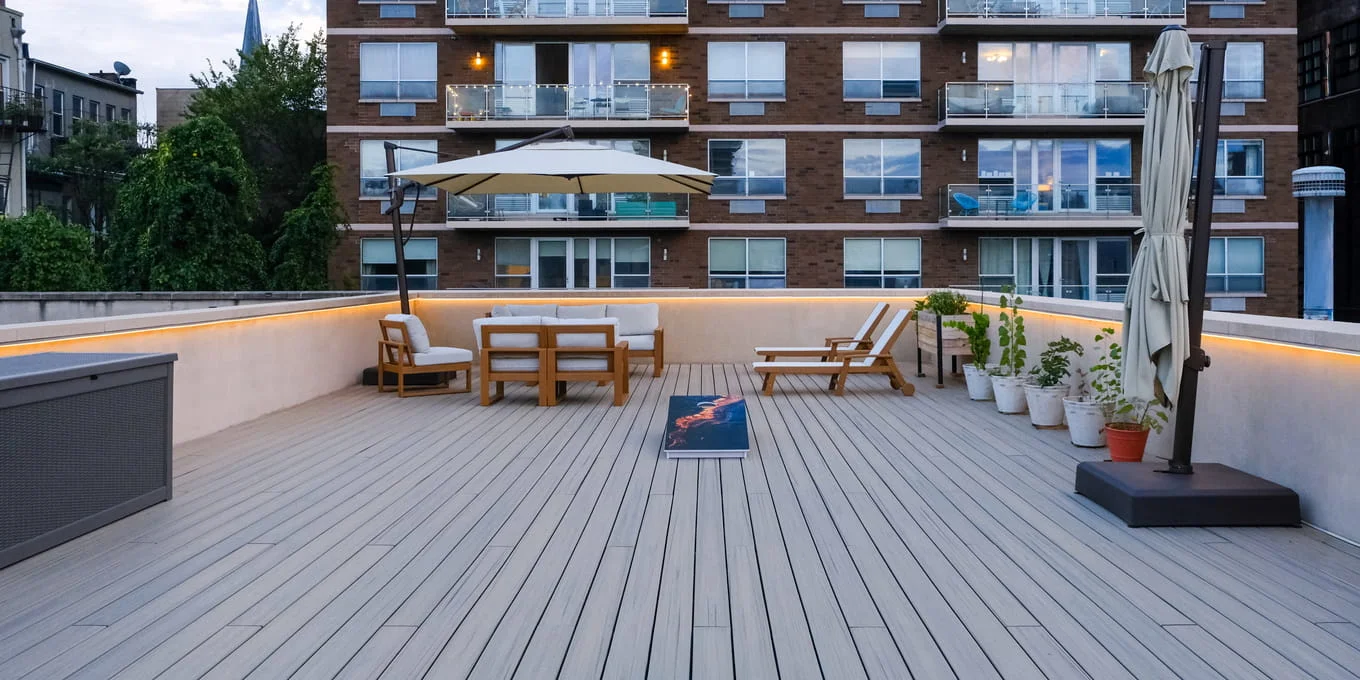
25-year cost comparison
Here's how the numbers look for a 400-square-foot deck in NYC using mid-to-premium products:
Composite (Trex Transcend or TimberTech Pro):
- Installed cost: $16,000 – $28,000
- Annual maintenance: $0
- 25-year maintenance total: $0
- Board replacement (estimate): $0 – $1,000
- 25-year total: $16,000 – $29,000
Hardwood (Ipe, oiled annually):
- Installed cost: $20,000 – $32,000
- Annual oiling (~$2,100/year): ~$52,500
- Board replacement: $0 – $1,000
- 25-year total: $72,500 – $85,500
Hardwood (Ipe, allowed to gray naturally):
- Installed cost: $20,000 – $32,000
- Annual maintenance: $0
- Board replacement: $0 – $1,000
- 25-year total: $20,000 – $33,000
The takeaway: if you plan to let hardwood age naturally to gray, the 25-year cost is comparable to composite. If you want to maintain the original wood color with annual oiling, hardwood becomes significantly more expensive over time. That oiling cost is the single biggest factor in the long-term comparison.
Which is better for NYC rooftops?
For rooftop decks specifically, a few practical considerations come into play beyond material preference.
Fire rating. NYC Building Code has strict requirements for combustible materials on rooftops. Ipe holds a natural Class A fire rating, equivalent to concrete, which can simplify approvals in some cases. On the composite side, specific product lines also carry fire ratings that meet rooftop requirements: Trex Refuge and TimberTech Vintage are two examples that hold the necessary ratings. The product line matters. Not all composite products qualify for rooftop use, so verifying the fire rating of the specific product is an important step during the design phase.
Moisture. Rooftop decks are exposed to more weather than ground-level patios. Composite handles persistent moisture well because the capped surface prevents water absorption. Ipe is also naturally moisture-resistant due to its density, but pooling water on a rooftop surface can cause issues over time if drainage is not properly designed.
Weight. Composite decking is lighter than ipe, though the difference is not dramatic. It's a factor worth considering on buildings where structural load capacity is tight, but on most projects, it's not the deciding variable between the two materials.
For ground-level patios and backyards in Brooklyn or Queens where rooftop-specific fire code considerations don't apply, either material works well. The choice comes down to whether you prefer the natural character of real wood or the zero-maintenance convenience of composite.
Which should you choose?
There's no single right answer. The best choice depends on your priorities.
Choose composite if you want minimal maintenance, a consistent appearance over time, and the lowest long-term cost. Premium composite lines deliver a remarkably wood-like look without any of the upkeep.
Choose hardwood if you value the natural warmth and character of real wood. Ipe is a timeless material — but you have to appreciate ipe in the first place to justify the investment, particularly if you plan to oil it annually. If you love the look of natural wood aging to silver-gray, ipe delivers that beautifully with almost no maintenance at all.
At Vandeck Builders, we install both composite and hardwood decking on rooftop decks, patios, and backyard spaces across Manhattan, Brooklyn, and Queens. We're certified installers for Trex, TimberTech, and Fiberon composite products, and we work extensively with ipe, cumaru, and other tropical hardwoods. If you're not sure which material is right for your project, request a free quote, and we'll walk through the options based on your specific site and budget.


-2.svg)