

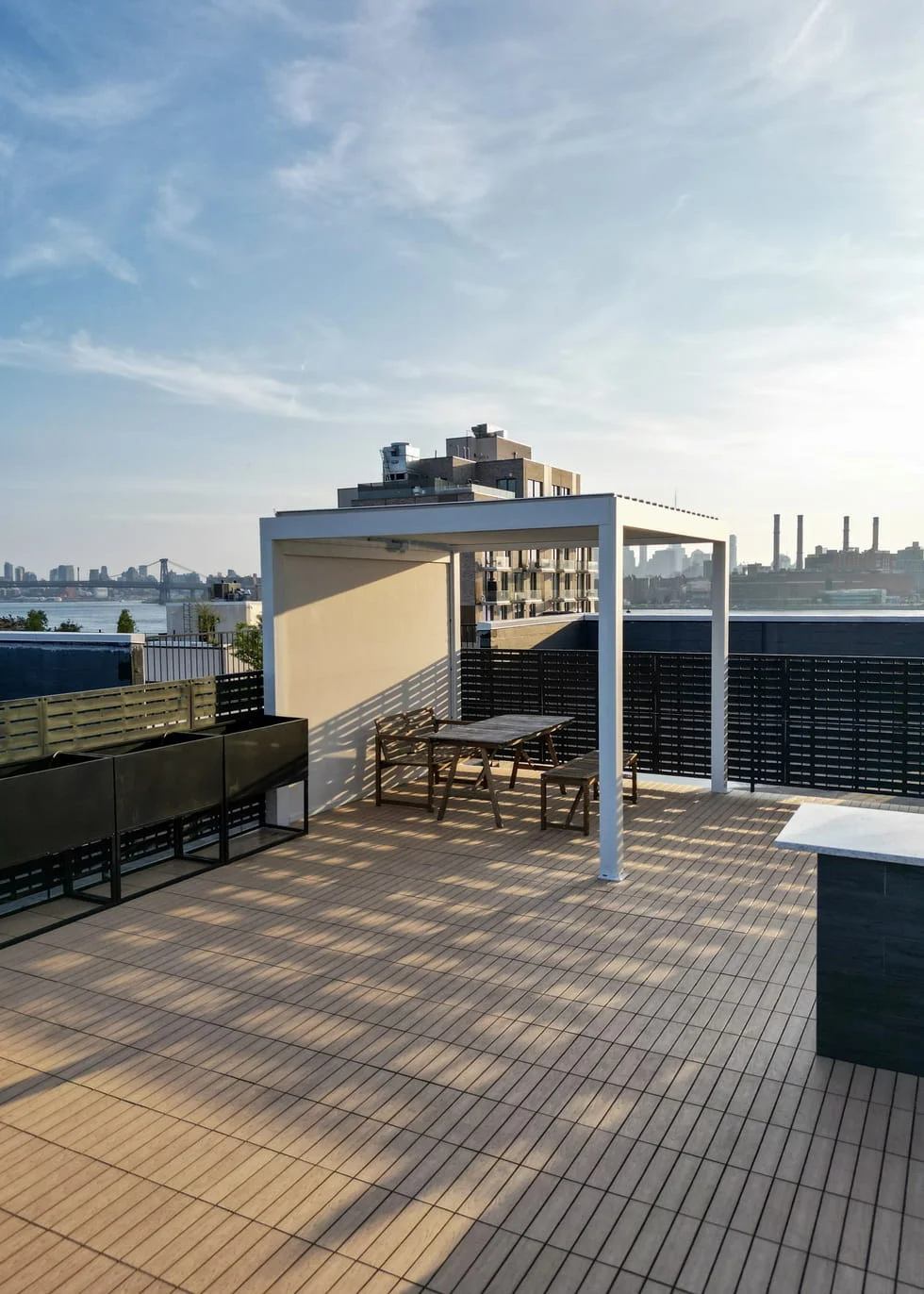
The challenge is that NYC’s zoning code doesn’t have a section called “rooftop decks.” Instead, rooftop structures fall under a framework called “permitted obstructions,” a system that defines what’s allowed to rise above the maximum building height. Understanding the basics of this system helps homeowners plan realistic projects and avoid surprises during the design and permitting process.
This guide covers the zoning rules we encounter most often on residential rooftop projects in NYC, including height limits, setbacks, what’s exempt, what requires a filing, and how the rules change depending on whether a structure is open, covered, or enclosed. We coordinate with your architect or expeditor on every project to navigate these requirements, but knowing what to expect upfront makes the entire process smoother.
The permitted obstructions framework
NYC zoning doesn’t set a single blanket rule for rooftop structures. Instead, the Zoning Resolution (primarily Sections 23-411 and 23-412) defines specific categories of structures that are permitted to rise above a building’s maximum height limit. Each category has its own height allowance, and in some cases, setback and coverage requirements.
The categories that matter most for residential rooftop projects include decks and recreational surfaces (allowed up to 3 feet 6 inches above the maximum building height), parapets (up to 4 feet), railings (up to 4 feet 6 inches, with the portion above 4 feet required to be at least 50% open), and safety guards (up to 10 feet, but must be at least 90% transparent above the 4-foot mark). Fences made of wire, chain-link, or transparent materials are permitted without a specific height cap. Bulkheads and mechanical equipment enclosures can rise 15 feet above the building height limit if they cover no more than 50% of the building’s lot coverage.
What this means in practice is that different elements of a rooftop project have different ceiling heights, measured from the building’s maximum allowable height, not from the roof surface. Your architect determines how these limits apply to your specific building based on its zoning district, existing height, and any non-compliances that are already in place.
Height limits for common rooftop features
The three rooftop structures clients ask us about most (pergolas, outdoor kitchens, and enclosed rooms) each fall into different regulatory categories, and that’s where the complexity starts.
Open pergolas (posts with open beams, no roof covering) have the lightest regulatory footprint. Because an open pergola has no roof and no enclosing walls, it doesn’t create floor area under the Zoning Resolution. It’s functionally similar to a trellis or arbor. The structure still requires a DOB filing with structural engineering review (anything attached to the building structure does), but it won’t trigger floor area calculations or count toward the building’s FAR (floor area ratio). The height needs to comply with the permitted obstruction rules, and your architect will determine which category applies based on the specific design.
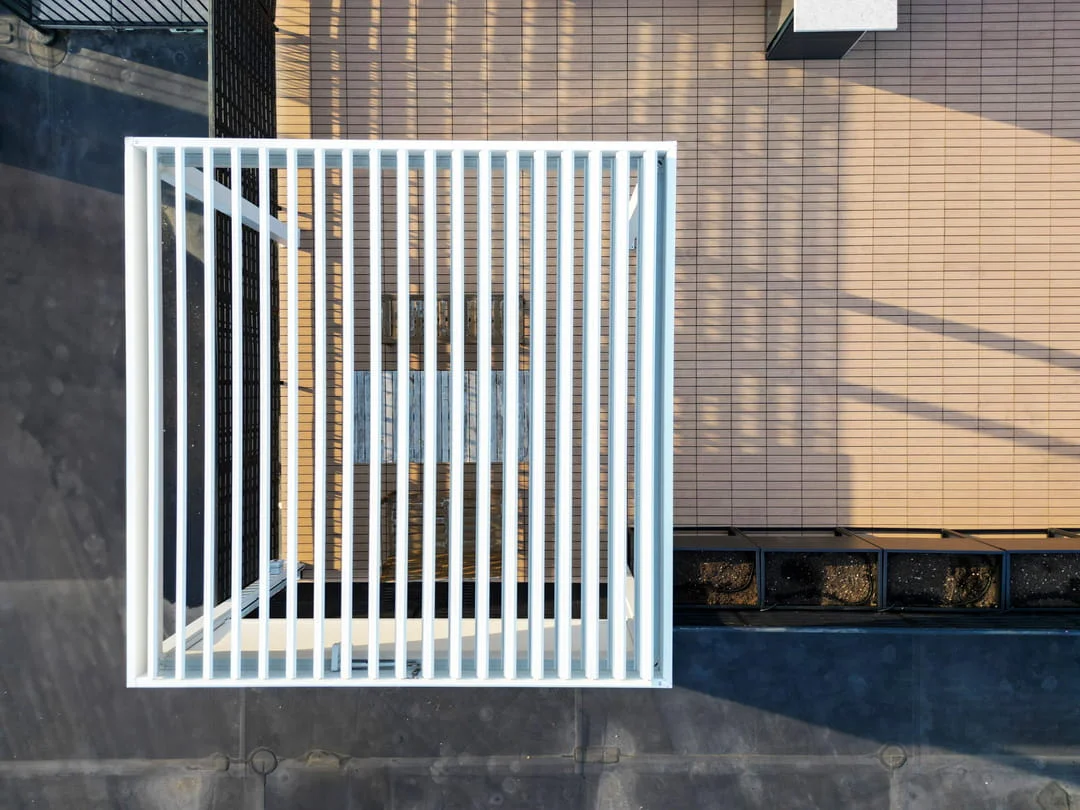
Pergolas with a louvered or retractable roof are where things get complicated. NYC’s zoning code has no specific provision for louvered pergola roofs. When the louvers are open and don’t create a weatherproof seal, the structure more closely resembles an open structure or sun control device. When the louvers close fully, it functions more like a covered space, which can trigger floor area implications. Because no DOB bulletin specifically addresses louvered roofs as their own category, the classification comes down to DOB plan examiner interpretation on a case-by-case basis. This is exactly the kind of nuance that makes working with an experienced architect critical for rooftop projects. We see louvered pergolas on many of our projects, and the permitting approach depends on the specific product and how it’s presented in the filing.
Pergolas with a solid, fixed roof are treated significantly differently. DOB Buildings Bulletin 2016-012 establishes that roofs covering porches or balconies count as floor surface area even if the space isn’t bounded by walls on all sides. A solid-roofed pergola is functionally a canopy or covered porch, and its area has real regulatory consequences. Under the Building Code, rooftop structures in aggregate can’t exceed one-third of the roof area, and structures exceeding certain limits may be classified as an additional story.
Fully enclosed structures like sunrooms or sheds are at the most restrictive end of the spectrum. An enclosed rooftop room counts as zoning floor area, is subject to FAR limits, may constitute an additional story, and requires full building code compliance. This means an Alt-1 DOB filing and a new or amended Certificate of Occupancy. Enclosed rooftop rooms are possible in NYC, but they involve a significantly more complex approval process than open terrace features.
Setback rules
Setback requirements, meaning how far a rooftop structure must be set back from the building edge, vary based on the type of structure.
Open structures like decks, railings, parapets, and fences have no lateral setback requirement from the building edge under the Zoning Resolution. They can be placed at or near the roof perimeter, subject only to their respective height limits. This is why open terrace features like paver decks, railings, and privacy screens can typically run right to the edge of the building without triggering setback issues.
Bulkheads and mechanical equipment enclosures face stricter rules. They must be located at least 10 feet from the street wall of the building, though they don’t need to be set back more than 25 feet from a narrow street line or 20 feet from a wide street line. Skylights require an 8-foot setback from the street wall edge.
The practical impact is that larger, more enclosed rooftop structures need to be positioned carefully to meet setback requirements, while open features like pergola posts, railings, and screens have much more flexibility in placement. Your architect maps these setback zones during the design phase so the layout accounts for them from the start.
What’s exempt and what requires a filing
Not everything on a rooftop requires a DOB filing. Understanding the line between exempt features and permit-required work helps with both budgeting and timeline planning.
Generally exempt from DOB filing: planters, built-in seating areas, and outdoor kitchen islands that don’t involve plumbing or electrical connections. These are considered furnishings or accessories for terrace use, not structural additions or building systems. Loose furniture, potted plants, and similar items are obviously exempt as well.
Always requires a filing: any work involving electrical connections, plumbing, or structural modifications to the building. An outdoor kitchen with a gas line and sink is a different filing category than a standalone grill island. Adding structural steel to support a pergola requires engineering review. Running electrical for permanent lighting involves an electrical permit. The moment building systems are touched, a filing is triggered.
For most residential rooftop terrace projects, the standard DOB filing is an Alt-2, which covers work that doesn’t affect occupancy, use, or egress. Per Buildings Bulletin 2018-002, an Alt-2 is appropriate when the proposed use is passive recreation accessory to the building’s principal use, the occupant load doesn’t exceed 74 persons, no increase in required exits is needed, and no structural alterations are required to increase live load capacity. This covers the majority of residential rooftop deck projects with open amenities.
An Alt-1 filing is required when the work affects occupancy, creates new floor area (any enclosed structure), or exceeds the occupant load thresholds. This applies to sunrooms, enclosed rooms, solid-roofed structures with walls, and any addition that generates zoning floor area. Alt-1 filings require a new or amended Certificate of Occupancy and involve a more extensive review process.
The open-to-enclosed spectrum
The single most important concept in NYC rooftop zoning is that regulations get progressively stricter as a structure moves from open to enclosed. Think of it as a spectrum.
At the permissive end, an open paver terrace with railings, planters, and furniture requires the least regulatory involvement. Move along the spectrum to an open pergola, still relatively straightforward, but a structural review is needed. Add a louvered roof to that pergola, and you’re in a gray area that requires careful presentation in the filing. Put a solid roof on it, and you’ve potentially created floor area. Enclose it with walls, and you’ve created a room that counts toward FAR, needs a new Certificate of Occupancy, and must comply with the full building code.
Every step along that spectrum adds regulatory complexity, filing requirements, and design constraints. This is why we always discuss the zoning implications of design choices early in the process, before a client falls in love with a fully enclosed sunroom on a building that’s already at its maximum FAR, or a solid-roofed pergola that would push the project from an Alt-2 to an Alt-1 filing.
How zoning shapes real project decisions
Zoning rules don’t just determine what paperwork is required. They actively shape the design of rooftop projects. On nearly every project we build, at least one element of the original design concept gets adjusted to work within the zoning framework.
A common example: a client wants a pergola with a solid roof for full rain and sun protection. Once we review the zoning implications with the architect (potential floor area calculation, possible classification as an additional story, stricter filing requirements), we often land on a louvered pergola instead. The louvers provide adjustable shade and rain protection when closed, but the structure doesn’t carry the same regulatory weight as a fixed solid roof. The finished result delivers most of the functionality the client wanted while keeping the project within a simpler filing category.
Another frequent scenario involves outdoor kitchens. A client envisions a full kitchen with a sink, gas line, and built-in refrigerator. The sink requires plumbing, which triggers a plumbing permit and potentially changes the filing scope. We’ll discuss whether the sink is essential or whether a prep station with a portable water setup can serve the same purpose without the additional permit requirements. Sometimes the plumbing is worth it. Sometimes the simpler approach gets the kitchen built faster and at a lower cost without sacrificing much functionality.
These aren’t compromises. They’re informed design decisions that account for the regulatory reality of building on a New York City rooftop.

Working with your architect and expeditor
We coordinate with the client’s architect or expeditor on every rooftop project that involves zoning and DOB review. Our role is to provide the construction expertise (what materials work, how structures are built and anchored, what’s feasible on the specific roof) while the architect handles the zoning analysis, code compliance, and filing documentation.
If you don’t already have an architect, we can recommend professionals who specialize in NYC rooftop projects and are familiar with DOB’s interpretive approach to the permitted obstruction rules. Having an architect who understands the nuances, especially around louvered pergolas, rooftop enclosures, and the open-to-enclosed classification spectrum, can make the difference between a smooth filing process and months of back-and-forth with the examiner.
For more on the DOB permit process itself, including when a permit is required and what to expect, see our guide to NYC roof deck permits.
Planning a rooftop project in NYC?
We design and build rooftop decks and pergolas across Manhattan, Brooklyn, and Queens, and we work within the zoning framework every day. If you’re considering a rooftop project and want to understand what’s realistic for your building before investing in architectural drawings, we can walk through the possibilities during an initial consultation.


-2.svg)